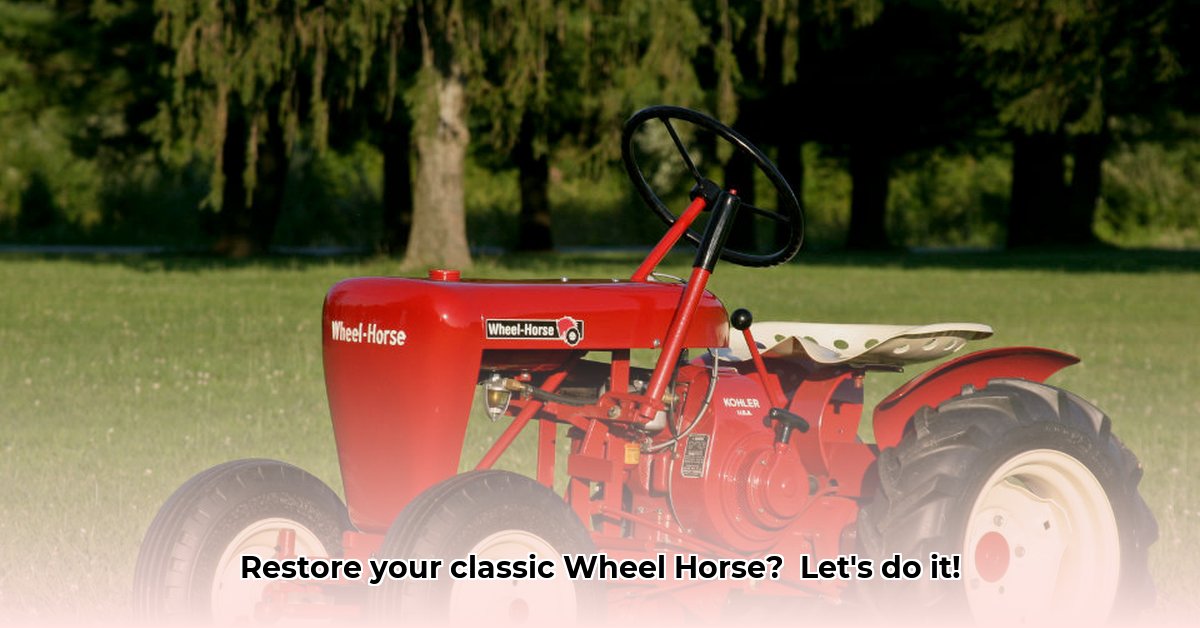
Unearthing Your 1958 Wheel Horse RJ-58: The Treasure Hunt Begins
The thrill of restoring a vintage 1958 Wheel Horse RJ-58 tractor is more than just mechanics; it's a journey of discovery. These machines are increasingly rare, making the search itself a rewarding adventure. Where do you begin? Online forums dedicated to vintage tractors, like Garden Tractor Talk, are excellent starting points. Antique equipment auctions, both online and in-person, offer another avenue. Don't underestimate the power of word-of-mouth; fellow collectors and enthusiasts might know of hidden gems. For more information on similar models, check out this 1968 Wheel Horse.
But finding a potential RJ-58 is only half the battle. Before you fall in love, conduct a thorough inspection. Look for rust, missing components, or signs of previous repairs. A pristine machine will have a higher price tag, reflecting its condition. However, even a rough-around-the-edges model can be a worthwhile project with the right approach and realistic expectations. Remember to budget thoughtfully—costs can escalate quickly depending on the tractor's condition.
Assessing Your Find: A Pre-Restoration Inventory
Before you touch a wrench, meticulously document your tractor's condition. This is akin to creating a detailed roadmap for the restoration. Start by taking comprehensive photographs—close-ups, wide shots, everything! This visual record will be invaluable throughout the process and beyond. As you photograph, note parts needing replacement, repair, or those in good shape. Your memory can be surprisingly unreliable!
The Restoration Process: A Step-by-Step Guide
Restoring a 1958 Wheel Horse RJ-58 demands patience. Rushing leads to errors and setbacks. We'll break down the process into manageable steps:
Meticulous Disassembly: This isn't just taking things apart; it's systematic dismantling. Label everything meticulously using masking tape and a marker. Number components logically and use photos to supplement your notes. Clean each component as you remove it.
Engine Revival (Kohler or Clinton): The engine is the heart of your tractor. A complete rebuild is likely. Disassemble, clean, inspect, replace worn parts, and reassemble. Sourcing vintage engine parts requires persistence. Local specialists, online forums, and classic tractor parts suppliers are your allies.
Bodywork TLC: Address rust, dents, and damage. Depending on the extent of the damage, repair or replace panels. Sandblasting and repainting are often necessary. Consider eco-friendly paint options for a sustainable approach.
Mechanical Overhaul: Focus on the transmission, axles, and other mechanical components. Replace worn bearings and seals. Thoroughly testing each component is crucial before moving on.
Electrical System Refresh (if applicable): Outdated wiring likely needs replacement. Wiring diagrams are indispensable.
The Rewarding Reassembly: Carefully reassemble, following your detailed documentation. Test each component as you connect it to ensure proper function.
Testing and Tuning: Fire up the engine and test every function. Fine-tune the carburetor for optimal performance.
Sourcing Parts: The Persistent Quest
Finding parts for a 60-year-old tractor is challenging but achievable. Online forums for vintage tractor enthusiasts are invaluable resources. Antique equipment suppliers and salvage yards are other options, requiring patience and persistence. Consider 3D printing for unavailable parts as a truly sustainable option.
Maintaining Your Restored Gem
Regular maintenance ensures your restored RJ-58 runs smoothly. Regular oil changes, belt and hose inspections, and keeping it clean and sheltered are essential. Always follow safety guidelines before starting the engine and prioritize safe operating practices.
Sustainability: A Modern Perspective
Restoring a vintage tractor offers a sustainable counterpoint to modern alternatives. While lower fuel consumption and reduced emissions are potential benefits, sourcing replacement parts and potentially higher repair costs present a counterbalance. The ultimate sustainability is a case-by-case analysis.
The Rewards of Restoration: A Labor of Love
Restoring a 1958 Wheel Horse RJ-58 is challenging, but the rewards are immense. It's a connection to history, a tribute to craftsmanship, and a chance to create something unique and potentially sustainable. The satisfaction of a functional, beautifully restored machine is unparalleled. Isn't that worth the effort?